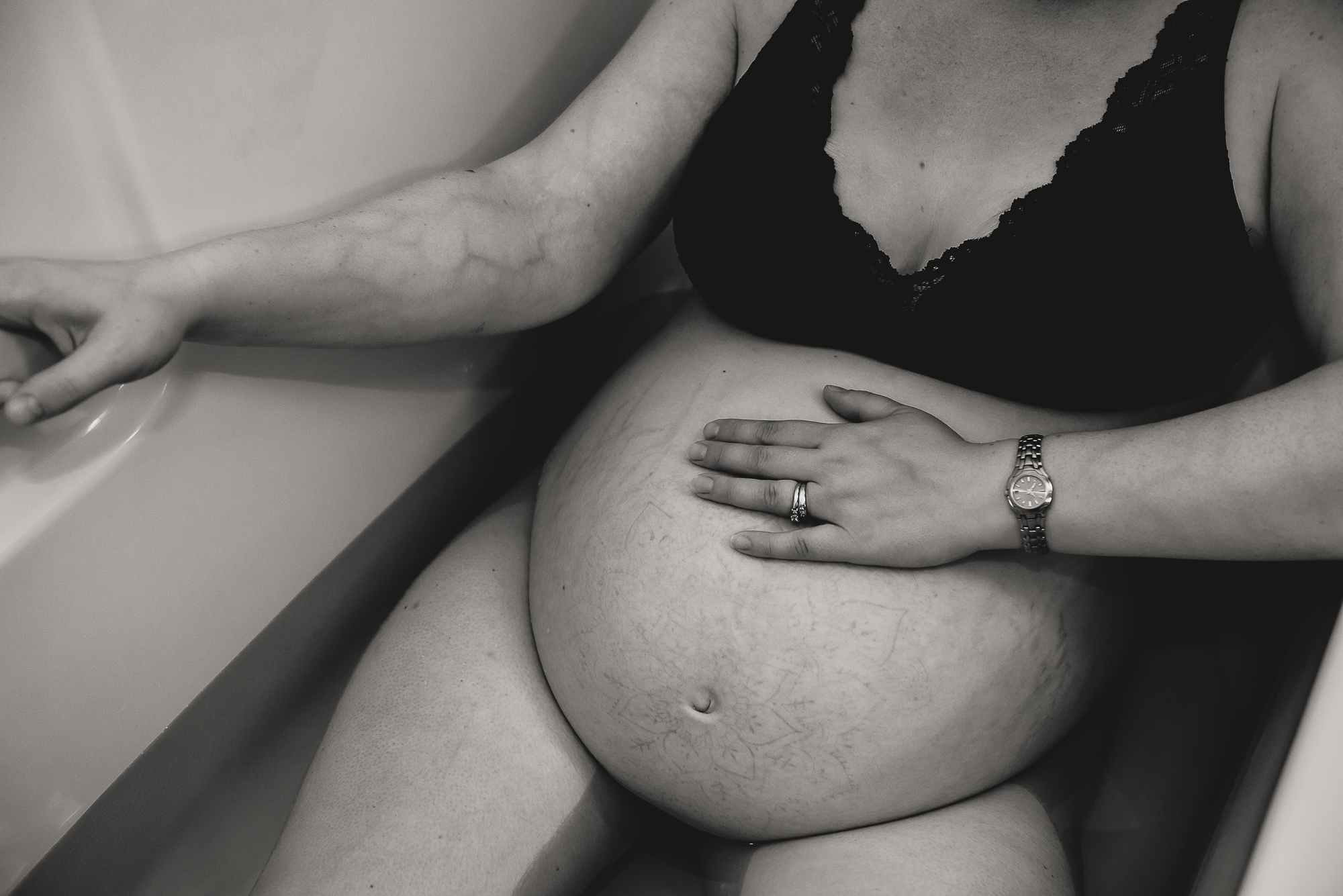
The pregnancy industry has trained us to focus on the wrong things. The crib, the wallpaper, the chrome stroller with the cup holder. These are the visible signals of preparedness — easy to photograph, easy to perform, easy to check off.
And yet none of them will be present in the room when your body begins to open.
What will be present is your nervous system. The rhythms of breath you have rehearsed, or not. The way your body has learned to hold tension, or release it. The voices in your head — yours, your mother's, the well-meaning stranger at the grocery store — and which ones are loudest by the time you reach 3 AM in transition.
Why the nervous system is the labor partner you cannot replace
Labor is not, in the end, a battle of will. It is a biochemical conversation. The hormones that allow your cervix to open — oxytocin chief among them — are exquisitely sensitive to your sense of safety. They flow easily in quiet, low-light, familiar spaces. They falter in fluorescent rooms full of strangers asking questions.
This is why a calm, prepared nervous system matters more than almost any other factor in low-risk birth. Your body wants to do this. Your job is to get out of its way.
Preparation is not adding more. It is taking away — the noise, the fear, the obligation to perform. So that what is left is what was always there.
Where the work actually begins
The good news is that you do not need a meditation retreat or a yoga certification. You need small, repeatable practices, woven into your day, that teach your body what calm feels like — so that on the day, it can find calm again.
1. Breath, daily, before anything is hard
Slow nasal breathing — four counts in, six counts out — for five minutes a day. The reason to start now is not because today is hard. It is so that when something is hard, your body already knows the way back.
2. Notice what your body is telling you
Sleeping positions that feel wrong are not wrong. They are information. If lying on your back feels increasingly uncomfortable as pregnancy progresses, that is your body telling you something about how it would like to give birth — and where it does not want pressure. Listen to it.
3. Curate what you consume
You will not unsee what you have seen. The birth horror stories your aunt loves to share at dinner, the dramatized hospital scenes on television, the algorithm's idea of what you'd like to watch — all of this becomes part of the soup your nervous system swims in.
Choose differently. Consume calm, successful, ordinary birth stories — Instagram is, surprisingly, an excellent place for this — until they outnumber the dramatic ones in your mind by ten to one.
4. Move toward your feminine, not away from it
Whatever this means to you. For some women it is dance. For others, gardens. Soft music. Sitting by water. Cooking slowly. Saying yes to joy and no to the things that make you feel like a productivity unit. Birth is asked of the most feminine part of you. Spend the pregnancy practicing access to that part.
5. Speak to the baby
Out loud. Often. The conversation has already begun — you might as well join it consciously. This sounds woo. It is not. It is the most natural thing in the world.
What this looks like, in practice
You will buy the crib. You will paint the room. None of that is wrong. But notice how much energy and attention go into the visible preparation, and how little into the internal one. Notice that the second is doing most of the actual work.
The women we know who had the calmest births did not all read the same books or buy the same products. But all of them, in some form or another, had spent the months before birth getting acquainted with their own nervous system. Quietly, daily, without making a project of it.
This is the work. It does not photograph well. It does not appear on a registry. And it is the single most important thing you can do.
This essay is part of the ongoing Journal at The Home Birth Path. If you found it useful, the full Home Water Birth Preparation Guide goes much deeper — including the practical setup of the birth space, the supplies checklist, and the safety considerations.